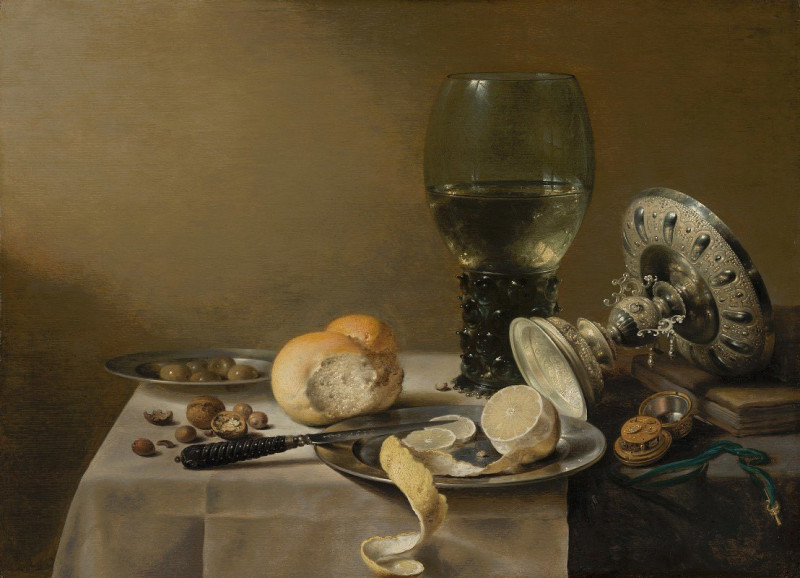
Still Life with Tazza (1636)

Technique: Giclée quality print
Recommended by our customers
Size
Finishing (pick one!)

More about this artwork

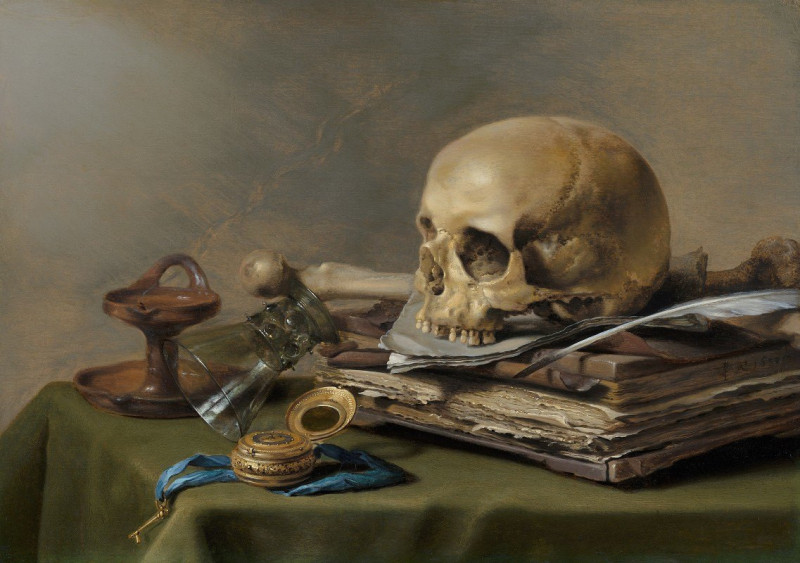
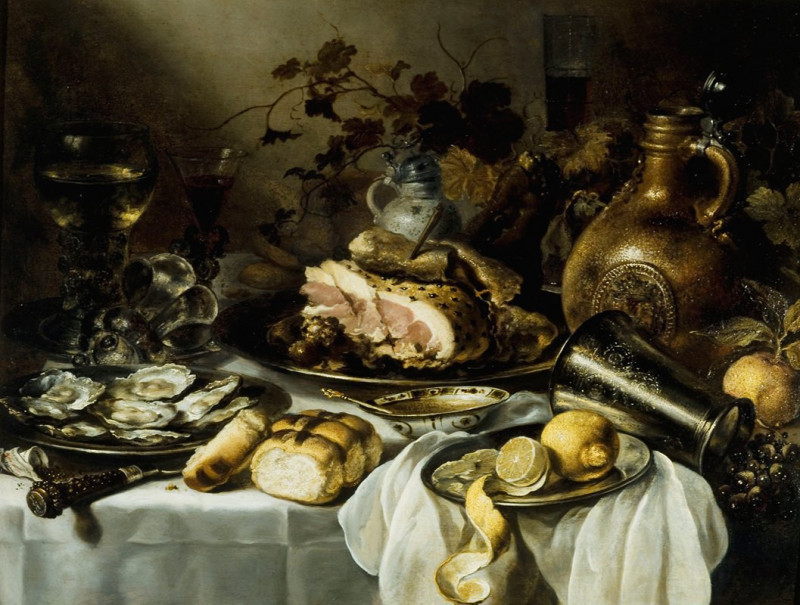
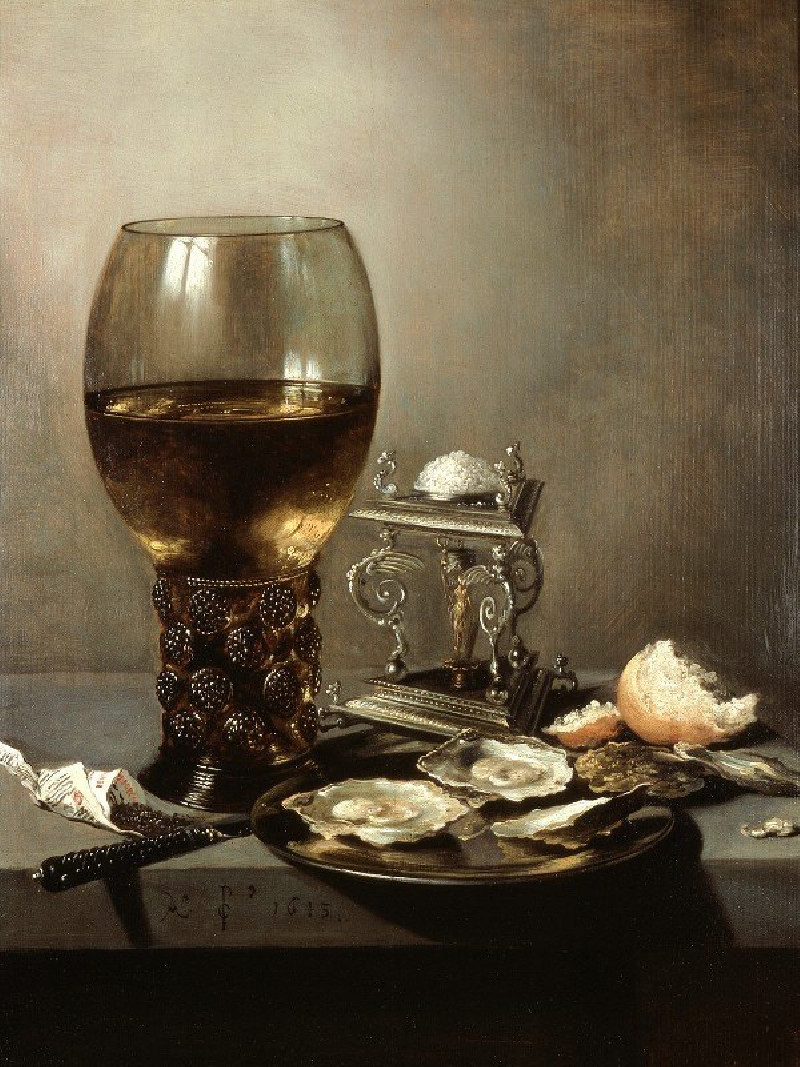
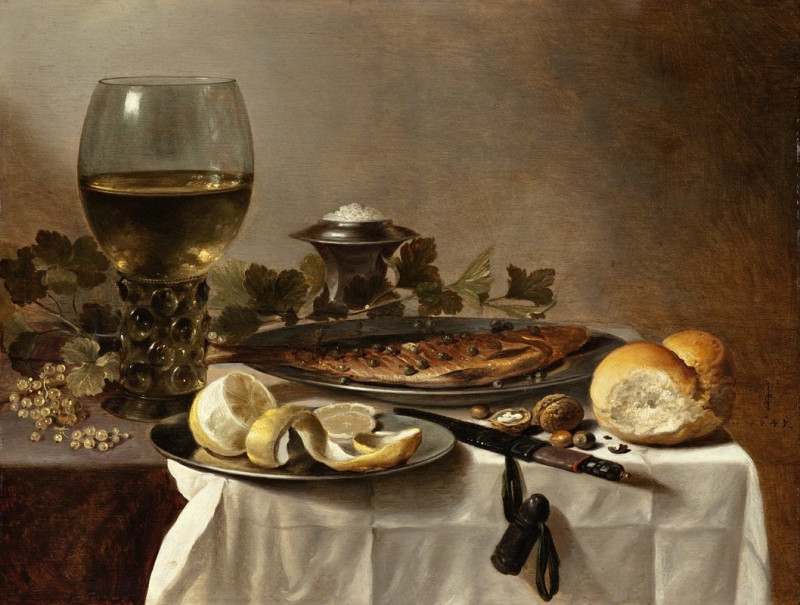
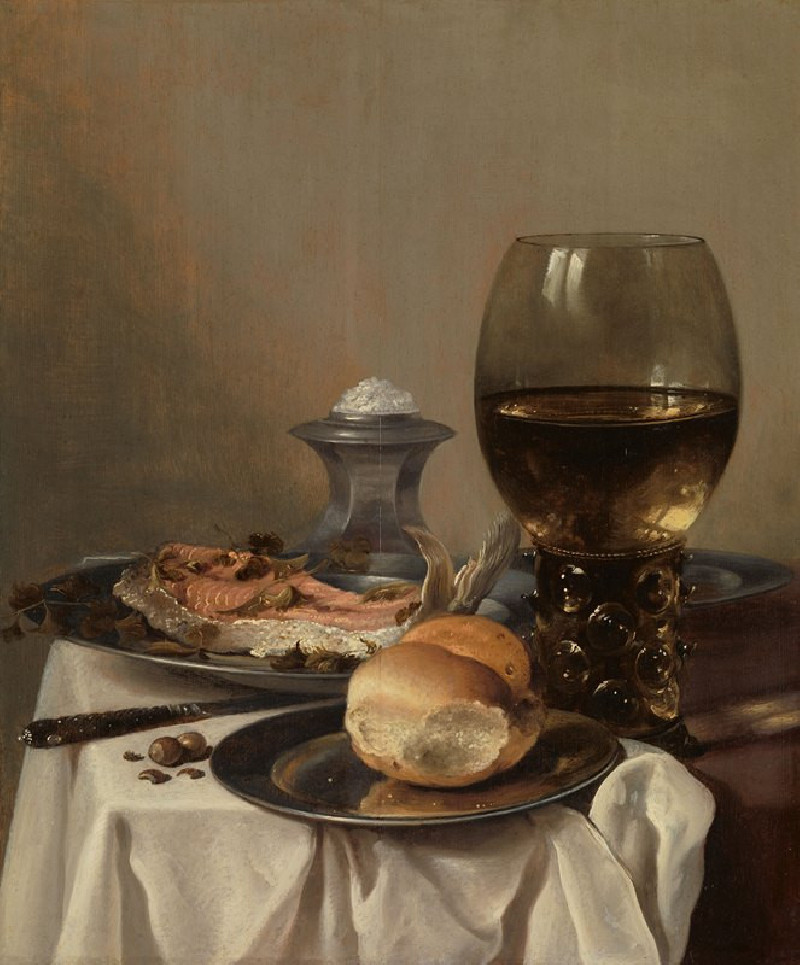
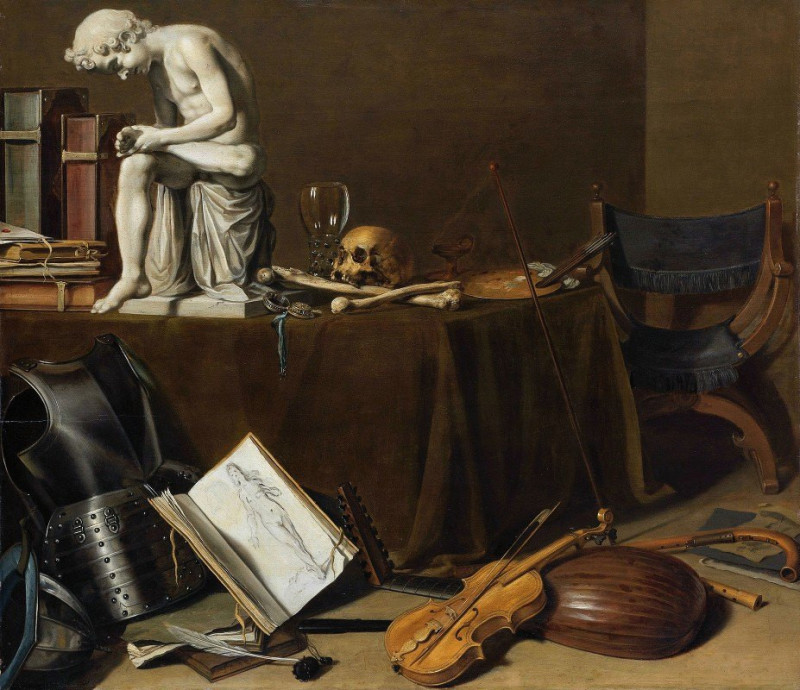
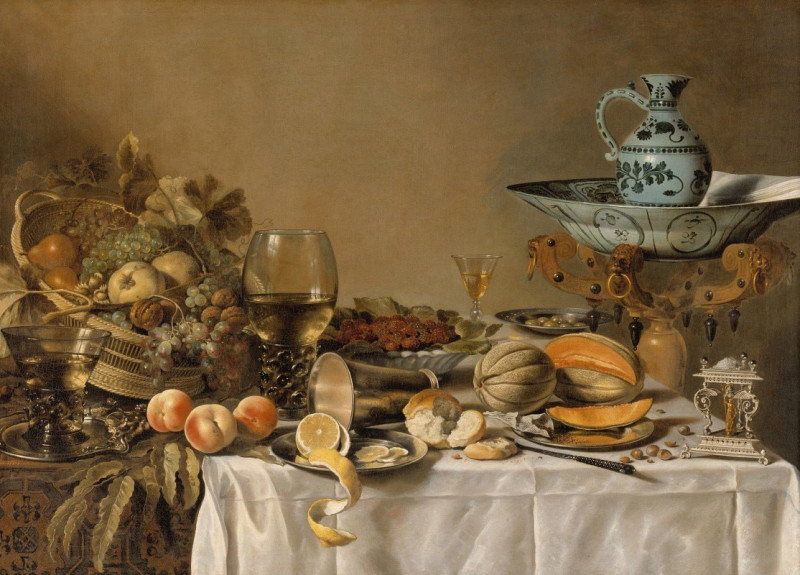
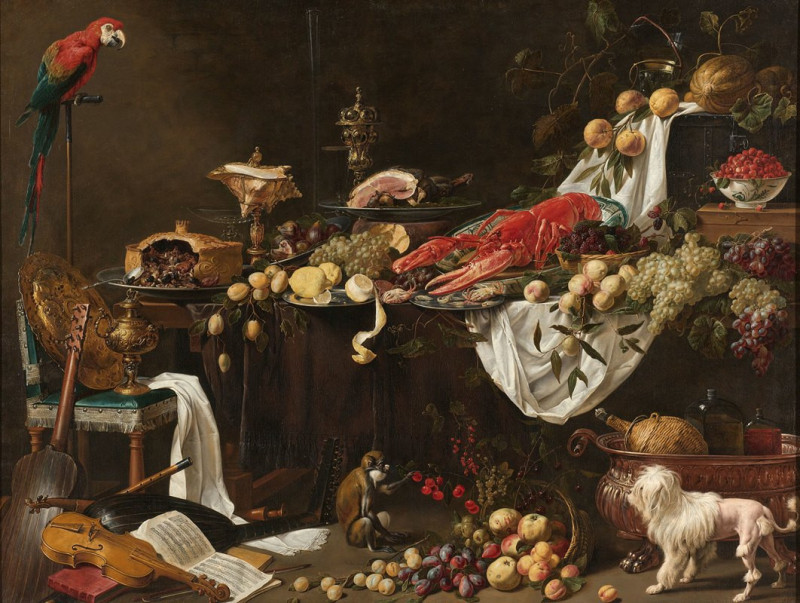
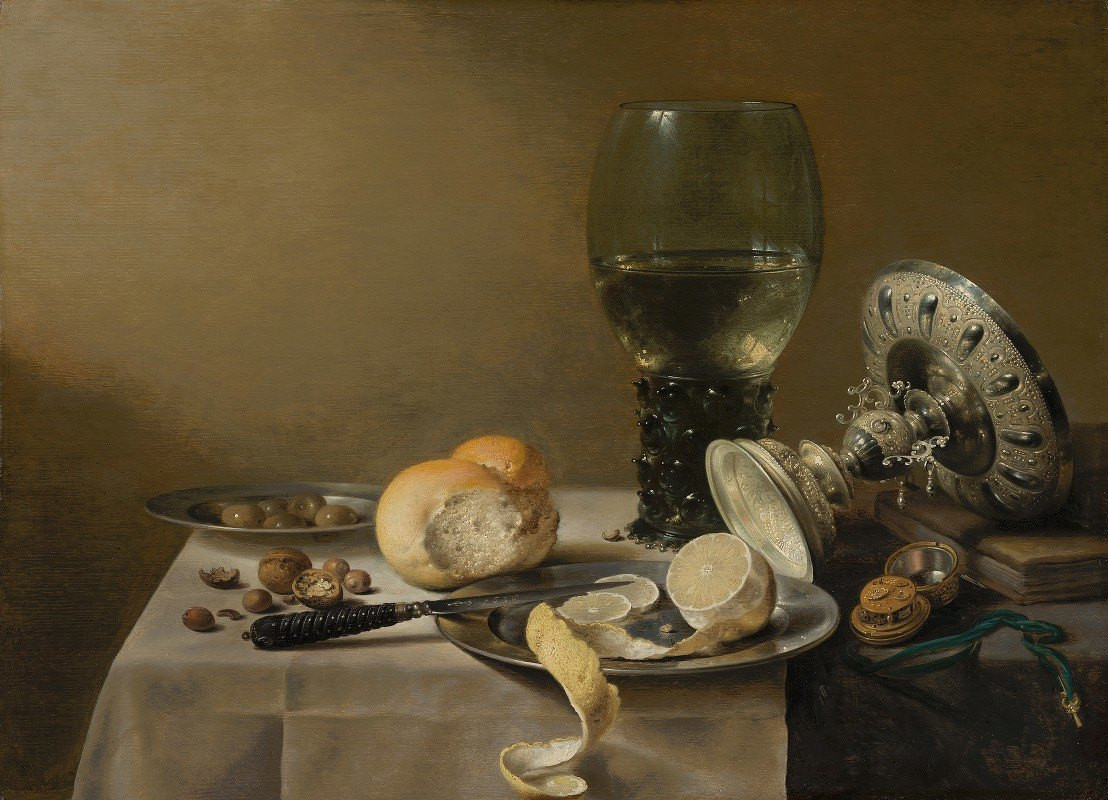
"Still Life with Tazza," a painting by Pieter Claesz, created in 1636, is a captivating exploration of texture and reflection, masterfully capturing the quiet elegance of everyday objects. This piece is a stunning example of the still life genre, showcasing Claesz’s exceptional ability to depict light and shadow to create a serene, almost introspective atmosphere.The painting features a carefully arranged assortment of items typically found in a 17th-century Dutch setting. A partially peeled lemon rests on a pewter plate, its rind curling delicately. Nearby, a sumptuous bread roll displays a torn crust, suggesting a moment paused. Olives and a broken nut further populate the plate, contributing to the sense of abundance.A prominent feature in the composition is the ornate tazza, or stemmed cup, on the right. Its reflective silver surface intricately captures and bends the light around it, creating subtle reflections and shadows, showcasing Claesz's skill in rendering different textures and materials. Beside it, a large glass filled with water adds a contrasting element of transparency and simplicity.In the background, subtle details like a watch on a chain and a book partially covered by the large overturned pewter lid hint at themes of temporality and perhaps the transitory nature of life—common motifs in Dutch still life paintings of this period.

Delivery

We create reproductions on demand, with a production time of 5 to 7 business days.

Our courier service ensures delivery within an additional two business days.

If you need a faster turnaround, please contact us. We can often expedite the process to meet your needs.

You can also pick up your paintings at our galleries in Kaunas or Vilnius.

Returns

Yes, reproductions can be returned.

If you have any concerns more than 30 days after purchase, please contact us. We will either provide a refund or offer a replacement!

Please note that we accept a maximum of two returns per customer. Since reproductions are made to order, we encourage you to choose responsibly.

Shipping expenses are non-refundable.

Pieter Claesz was a distinguished painter of the Dutch Golden Age, known for his exceptional still lifes. He gained particular acclaim for his highly realistic representations of ordinary objects such as food, glassware, and tableware, all arranged with extraordinary precision and nuanced lighting. His paintings are esteemed for their well-balanced compositions and his remarkable ability to capture textures and reflections, which left a significant mark on his contemporaries.

Born in Berchem, Belgium, near Antwerp, Claesz joined the Guild of St. Luke in 1620. Soon after, he relocated to Haarlem, a thriving artistic hub during the Dutch Golden Age. While living there, his son Nicolaes Pieterszoon Berchem, who would become a landscape painter, was born on October 1, 1620, further enriching the family’s artistic heritage.

Throughout his career, Pieter Claesz earned widespread recognition for his "ontbijt," or breakfast pieces—still lifes that portrayed meals and typical items found on Dutch tables in the 17th century. Working alongside Willem Claeszoon Heda, another prominent Haarlem artist, Claesz rose to prominence as a leading figure in this genre. Today, their paintings are regarded as definitive examples of Dutch still life art, reflecting the affluence and domestic customs of their time.

Claesz’s refined realism established new standards for the depiction of subtle shifts in light and painstaking detail. Many of his masterpieces are now housed in major museums around the globe, where they are appreciated and studied for their technical mastery and their important place in the history of Western art.